Focus ROMI.HR
/
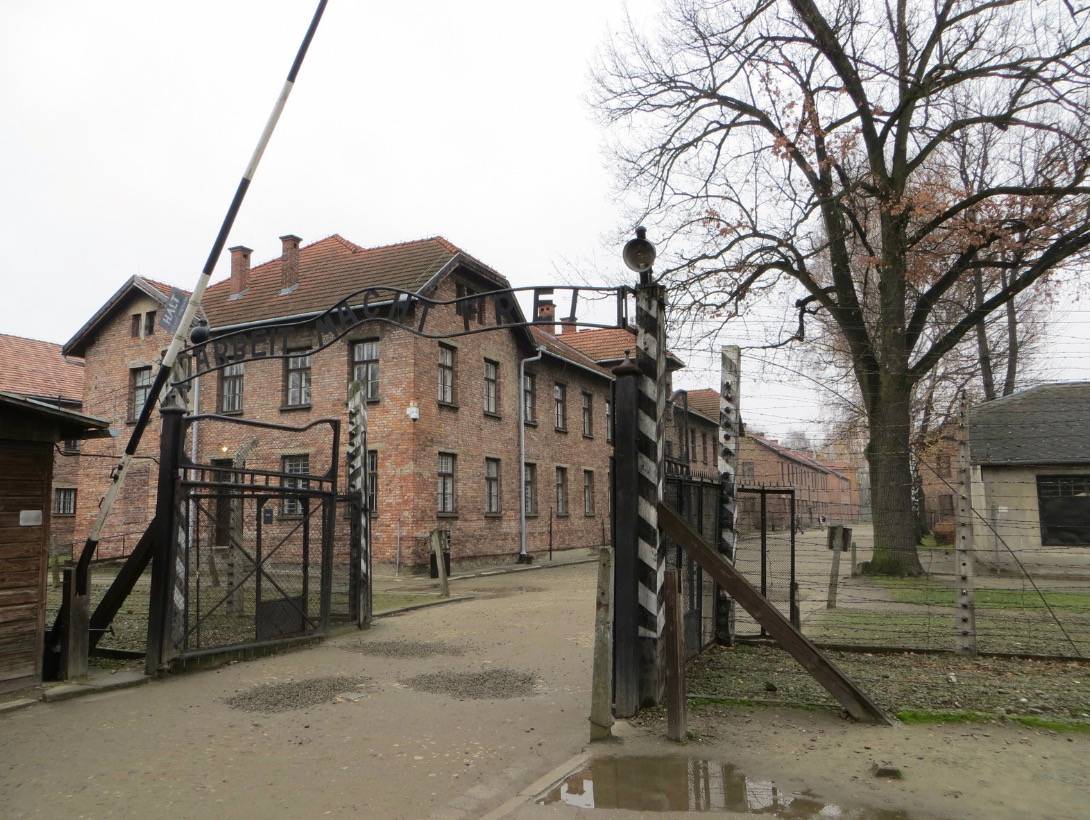 Entrance to the former Nazi concentration camp Auschwitz. Source: waldomiguez from Pixabay via Canva
 August 2nd marks the anniversary of a horrific event at Auschwitz-Birkenau concentration camp. On the night of August 2-3, 1944, the Nazis liquidated the "Gypsy Family Camp", a special section of the camp where Roma and Sinti people were held. Despite fierce resistance—mostly women, children, and the elderly—were murdered in the gas chambers. This date is now commemorated as European Roma Holocaust Memorial Day to honor the memory of the many thousands Roma and Sinti people who were victims of the genocide carried out by the Nazi regime and their allied regimes.
The “Gypsy camp”, also known as the “Gypsy family camp” in section B-II-E of the Auschwitz-Birkenau concentration camp, was established after the Auschwitz decree issued on 16 of December, 1942, and on 29 of January, 1943, ordering the concentration of "gypsy half-breeds, gypsies-Roma and non-German members of gypsy tribes of Balkan origin"[1] from the Reich territories and occupied countries. The “Gypsy camp” was in operation from the end of February 1943 to the beginning of August 1944.
The first prisoners arrived on February 26, 1943. In the first three weeks alone, thousands of Roma and Sinti were deported to this new, still unfinished section of the camp. Over the 17 months of the “Gypsy Camp” existence, thousands of men, women, and children passed through it — most meeting their tragic end there. The largest group came from Germany, mainly in 1942, from various local concentration camps where they had already been imprisoned. Between March and May 1943, Roma and Sinti were also deported from Austria and Poland. In the spring of 1944, prisoners from the German-occupied Netherlands were brought to Auschwitz on May 21. Earlier transports from Belgium took place in November 1943 and January 1944, bringing not only Roma from Belgium but also Roma and Sinti from France, Netherlands, Germany, Spain, and Norway. In spring 1944, deportations also came from Nazi-occupied areas of the Soviet Union, with Roma arriving from places like Brest and Lithuania.
Between 1943 and 1944, under Himmler’s “Auschwitz Decree,” thousands of Roma and Sinti people also from Bohemia, Moravia, and Silesia were deported to the “Gypsy Camp”. The mass deportations were carried out by rail, with people packed tightly into freight cars without food, water, or toilets. Prisoners were gathered at collection points like sports clubs or inns, then transported from cities such as Prague, Brno, and Olomouc. The first mass transportation included over a thousand Roma from South Moravia on March 6, 1943, plus several other deportations like this throughout 1943 and early 1944, including from Roma camps at Lety u Písku and Hodonín u Kunštátu. Most of those deported perished in Auschwitz-Birkenau.
In the spring of 1944, the SS decided to liquidate the “Gypsy Family Camp”. Their first attempt to do so was met with resistance as Roma uprising happened in May 16, when thousands and thousands of prisoners resisted leaving their barracks. Though details of the event still remain uncertain. Gradually, prisoners who were fit for forced labor were transferred to other camps: hundreds of men and boys to Buchenwald and Flossenbürg, and women and girls to Ravensbrück. The final liquidation took place on the night of August 2–3, 1944. Thousands of Roma remaining prisoners — mostly elderly, sick, mothers with children, orphans, and fathers who stayed with their families — were forcibly removed, taken to Crematorium V, and murdered in the gas chambers. Their bodies were burned in trenches because the crematorium was no longer fully operational.
After this massacre, further killings continued. Roma prisoners who had been sent to other camps but were later deemed unfit for work were returned to Auschwitz-Birkenau and gassed. This included hundreds of boys sent back from Buchenwald in September 1944 and hundreds more men, women, and girls returned from Buchenwald and Ravensbrück in October 1944. Some went through selections and were brought back to Ravensbrück, but the rest of them were murdered in the gas chambers.
The story of the Roma and Sinti deportations to Auschwitz-Birkenau is a tragic reminder of the Nazi regime’s systematic attempt to wipe out entire communities. Thousands of people — families, children, and elderly — were torn from their homes, forced to move with brutal transports, and murdered in gas chambers or worked to death simply because of who they were.
This horror was not confined only to Auschwitz alone. Similar atrocities took place at the Jasenovac concentration camp in the Independent State of Croatia, run by the Ustaše regime, where thousands of Roma, along with Serbs, Jews, and anti-fascist, were brutally murdered. Jasenovac, often called the “Auschwitz of the Balkans,” used equally cruel methods — forced labour, starvation, torture, and mass executions — to destroy an ethnicity and culture.
Remembering these connected tragedies is vital. They show how far hatred, racism, and extreme nationalism can go when left without consequence. That is why I believe that it is important to have memorial places like this, so we don’t forget the horrors that happened in history, because history is the most important teacher. It is important also to remember that killings and tortures like this didn’t happen only in Auschwitz and Jasenovac but in many places in the world at different times and are still happening in front of our eyes; we should be aware and resist.
 Back to Focus