Focus ROMI.HR
/
GREEN PRACTICES IN ROMA KNOWLEDGE
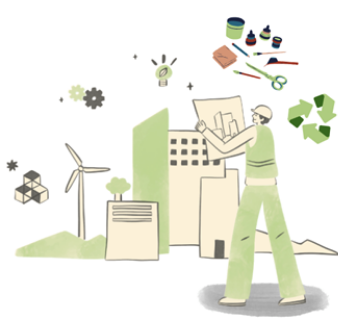 Source: Canva
 To create a world where Roma are able to use knowledge and skills to help improve society, it is useful to know about community traditions. By taking a closer look at Roma customs, it is easy to see that traditional skills can provide new ideas to manage resources, so there is enough for future generations while at the same time creating a more inclusive society and respect for the communities' practices.
ROMA KNOWLEDGE
Through storytelling, showing how to do things, or teaching skills and values directly, older generations share generational and traditional knowledge. This helps pass on important life lessons, cultural heritage, and useful skills to make sure that traditions and cultures will continue over time.
Historically, in Roma life, traditions are passed by word of mouth, through storytelling, rituals, and gatherings. Knowledge has been passed down orally instead of recorded in writing.
Generational and traditional knowledge are important to support Earth’s natural resources such as water, land, animals, plants, metals and minerals, so that there will be enough for future generations. The ability of people to use Earth’s resources in a way to meet today’s needs and make sure there is enough for the future is known as sustainability and is important for modern life. Roma contribute to sustainability through generational knowledge of traditions to preserve and reuse resources.
Since Roma communities mostly pass down traditions orally, sustainable knowledge is demonstrated through skills like crafts and recycling.
CRAFTS
Roma crafts have been around for centuries, including woodworking to make baskets and utensils, silversmithing by reusing coins and jewels to make jewelry, blacksmithing to make tools, weapons, and horseshoes, and coppersmithing and tinsmithing to make tools and repair pots. These crafts have been passed down through generations and require specific knowledge to break down discarded materials and rebuild them into something new.
A project called “Roma Culture: conservation and revitalization of crafts, part of the intangible heritage”, worked to strengthen practices of traditional crafts to preserve cultural heritage over five years by organizing events to encourage public access to Roma cultural heritage and show the sustainability of the practices.
They organized a showcase of 40 craftsmen from different Romanian Roma communities in two exhibitions in Bucharest and Sibiu, Romania. The craftsmen worked as coppersmiths, cast pot makers, ironsmiths, silversmiths, woodcarvers, basket weavers, and tinsmiths. By giving live demonstrations of sustainable craftsmanship, skills, and generational knowledge, the showcase helped other communities better understand the importance of Roma traditions and crafts. It produced a more open-minded attitude towards Roma and helped spread sustainable generational knowledge and preserve cultural heritage.
RECYCLING
The ancestral tradition of recycling in Roma communities; sorting away and restoring all things we see as trash, differs from modern ideas of always needing new things.
Roma recycling practices come from the necessity to survive, physical strength, and understanding of human nature. By minimizing waste and maximizing resources, materials can be used for as long as possible. This system of reuse and repair is known as a circular economy; it provides a reliable income, recycling in its purest form, and promotes sustainable resource management.
The Konik refugee camp in Montenegro housed Roma refugees who fled Kosovo in 1999. During the 19 years it was open, about half of the family's earned income by recycling and taking scraps such as iron, copper, and aluminum to a company who would sell them onwards to a steel plant in the city of Niksic (Nikšić). Refugees would also collect spare parts from old cars to be used in workshops to make repairs. Since local authorities in the area lacked the resources needed to remove the waste, as well as sell and dispose of it, these Roma communities were not only making a living but also providing an important environmental service for all citizens of the area.
The Connect Clean Roma Group (CCRG) in Serbia is an environmental cooperative that works towards the green transition of the Serbian economy and society and includes Roma as informal waste pickers in companies to help them engage in society, allowing them to demonstrate traditional recycling skills without being shunned. The cooperative also provides better prices for the raw materials than if the waste pickers were to sell the material to a private merchant. Including informal waste pickers in the recycling industry is one of the best solutions to support the green transition, where society shifts from a fossil fuel-based economy which uses resources like coal, oil, and natural gases to an environmentally friendly, sustainable, inclusive, and circular one.
In Serbian society, informal waste pickers supply the recycling industry with more than 87% of its raw materials. After collecting these cables, the workers process them to create copper and aluminum scraps. The group believes they will be able to produce more than 15 tonnes of scrap monthly to contribute to sustainable waste management and help the negative impact on the environment.
The group hopes to improve the bias against informal waste pickers in society and include them within organized recycling systems. CCRG also takes on social initiatives to improve and include Roma recycling practices in policymaking to support sustainable circular economies.
GENERATIONAL KNOWLEDGE FOR SUSTAINABILITY
The generational knowledge and traditions of Roma communities are important for the sustainability of our natural resources now and in the future. Traditional skills in crafts and recycling can support the green transition and circular economies.
By recognizing and supporting Roma communities, we can learn from these traditions to find new ways to be sustainable, address the negative impact modern practices have on the environment, and tackle misunderstandings about the practice of reusing old materials.
Creating projects and cooperatives that showcase Roma skills can provide steady income for families and encourage respect and appreciation for Roma knowledge, leading to better understanding, inclusion, and acceptance of communities.
 Back to Focus