Focus ROMI.HR
/
In the 1960s the system of International Human Rights Law was already relatively well-developed, since the international community - and especially its representatives at the United Nations - had devoted significant efforts in drafting relevant legal texts to foster Human Rights protection at the national level. However, there is one element that works better than the others in motivating States to adopt international conventions that would, eventually, limit their power: the urge to respond collectively to a transnational problem. Such a factor was, in the end, what brought massively different States together after the Second World War ended, and this very same element was also at the core of the decision to take a firm stand against racial discrimination.
Indeed, between 1959 and 1960 multiple anti-semitic incidents took place in several world countries, so much so that many historians and scholars today describe this mass phenomenon as the “Swastika epidemic”. According to historical reconstructions, in less than three months (between December 26, 1959 and March 1, 1960), a drastic increase in the number of antisemitic behaviors was recorded in East and West Germany, England, Italy, Canada, the Netherlands, Brazil, Norway, the United States of America, and South Africa. Attacks against Jews and Judaism took different forms, ranging from drawing swastikas on the walls of Jewish homes and institutions, to anonymous threatening letters and calls directed to rabbis and members of the Jewish community. Even though it is still hard to understand what triggered that unexpected wave of antisemitism, what is sure is that its magnitude was so massive that it forced the international community to come up with a collective condemnation of racial, religious, and national hatred.
Another event that is worth mentioning in this aspect was the sudden, international realization that racist policies and behaviors were not always necessarily related to colonialist practices, but rather that racism could also take place domestically. The prime example in this context was the acknowledgement of apartheid as an institutionalized discriminatory practice in South Africa, which made many States grow concerned over the respect of Human Rights in that country. Consequently, the fight to racial discrimination started to be perceived as a legitimate interest of third-countries, thus basically reducing the principle of national sovereignty.
Therefore, in 1965 the United Nations General Assembly (the UN body in which all States are represented) eventually adopted the International Convention on the Elimination of All Forms of Racial Discrimination, better known as ICERD. The ICERD entered into force four years later, in 1969, and as of today, it has been signed by 182 States, which have all accepted to respect its contents and obligations. Given its relatively limited length (only 25 articles), the ICERD can be read and explored quite easily even from non-experts of International Relations or International Law.
As in the majority of international conventions, Article 1 defines the scope of the treaty as well as racial discrimination, described as follows: “any distinction, exclusion, restriction or preference based on race, colour, descent, or national or ethnic origin which has the purpose or effect of nullifying or impairing the recognition, enjoyment or exercise, on an equal footing, of human rights and fundamental freedoms in the political, economic, social, cultural or any other field of public life”.
Articles 2 to 7 list all the measures that must be implemented by States that ratify the ICERD, including prohibiting and stopping racial discrimination, condemning racial segregation and apartheid, prohibiting racial incitement, ensuring equality in the enjoyment of rights, assuring remedies against any racial discrimination, and combating prejudice and promoting tolerance in schools.
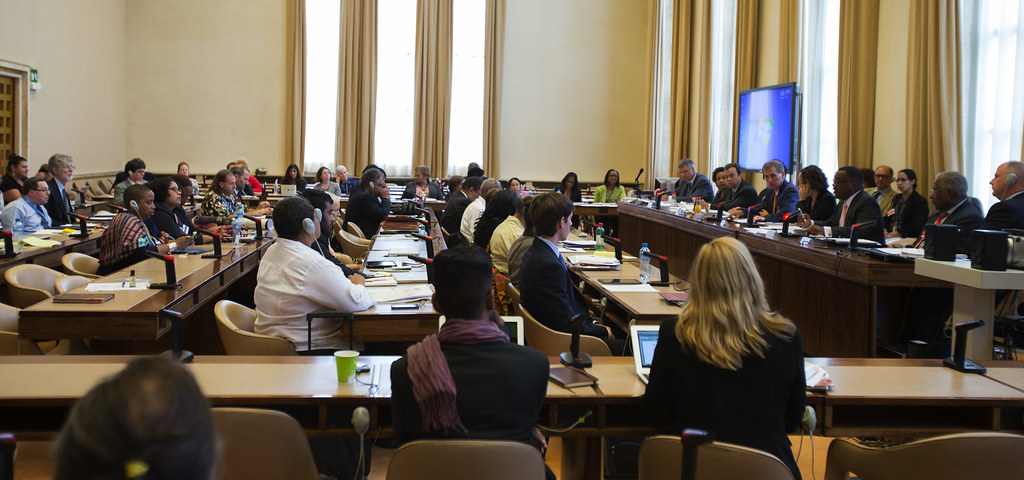
The second section of the ICERD, instead, focuses mainly on the role and functions of the Committee on the Elimination of Racial Discrimination. Similarly to what happens for the International Covenant on Civil and Political Rights (ICCPR) and many other UN treaties, this Committee is a working body that monitors the full and correct implementation of the ICERD by States. Every two years, the Committee receives a periodic report from every State party to the ICERD on the implementation of the first seven articles and of the previous recommendations from the Committee. Some space should also be devoted to describing the engagement of civil society in the reporting process, along with responses to the concerns previously raised by the Committee about persons who may receive less favourable treatments or may be discriminated against.
In line with other international conventions, the Committee is then in charge of reading periodic reports from countries, and to elaborate specific observations for each of them. Typically, concluding observations will be composed of three sections: an introduction, a discussion on the positive aspects that emerge from the periodic report, and lastly, a list of concerns and recommendations.
Yugoslavia signed the ICERD in 1966, and after its dissolution, Croatia succeded as a member of the in 1992. In August 2023, it received from the Committee the concluding observations on the combined ninth to fourteenth periodic reports. Among the positive aspects mentioned by the Committee, the most important ones for national minorities, including Roma, are the adoption of the revised protocol for procedures in cases of hate crimes, and the adoption of the National Roma Inclusion Plan 2024-2027 (Nacionalni plan za uključivanje Roma za razdoblje od 2021. do 2027. godine).
However, the elements of concern identified by the Committee are numerous, and many are directly related to the living conditions of Roma and, more in general, of national minorities in the country. Issues concern the lack of accurate information on the social and economic conditions of Roma, Serbs and non-citizens, and the ever-present cases of racial discrimination against members of the Roma and Serb communities, especially in the fields of education and employment. Similarly, the Committee has denounced the dissemination of negative stereotypes about Roma and Serbs that often serve as a base for racist hate speech and hate crimes. As mentioned also by the Human Rights Committee, which monitors the implementation of the ICCPR in its 2024 concluding observations, Croatia should implement a more efficient strategy to counter hate speech and hate crimes, especially since many of these events involve politicians and influential public figures, both at the national and local level. A particularly interesting measure suggested by the Committee is that of activating training programmes for police officers, public prosecutors and law enforcement officials to recognize hate crimes, and counter them effectively.
Another sensitive issue is the possibility for vulnerable groups, such as Roma and Serbs, to get access to free legal aid. Indeed, the Free Legal Aid Act passed by Croatia in 2013, is flawed under various perspectives. Indeed, the act eventually contributed to reduce the accessibility of legal aid, as a result of some requests raised by the Croatian Bar Association. Additionally, the actual implementation of the act caused further reduction of the service, basically hampering the potential outcomes of the law. For these reasons, no significant improvements have been made so far, making it hard for targeted people even to know that such a thing exists.
Additionally, the Committee decided to dedicate a whole paragraph to the poor living conditions of Roma, notwithstanding the adoption of the National Plan mentioned above. More specifically, the Committee has expressed concerns over the level of poverty and the substandard living conditions faced by Roma, the high unemployment rates, the low attendance rates of Roma children in secondary schools and the high dropout rates at all school levels, the persistence of segregated education, especially in Međimurje, and the practices of house demolition and forced evictions without offering Roma alternative adequate housing or compensation.
In the end, the concluding observations show that Croatian authorities should really step up their game in terms of Human Rights protection and of fighting against racial discrimination. Even though some provisions are currently in place, countering these issues rarely seems to be a priority for politicians. A great help in this sense can be offered by non-governmental organizations and civil society activists, as long as decision-makers are open to their suggestions and requests: fruitful cooperation can surely bring better results and sooner, so as to offer vulnerable groups a more peaceful and secure society in which they can live.
 Back to Focus