Focus ROMI.HR
/
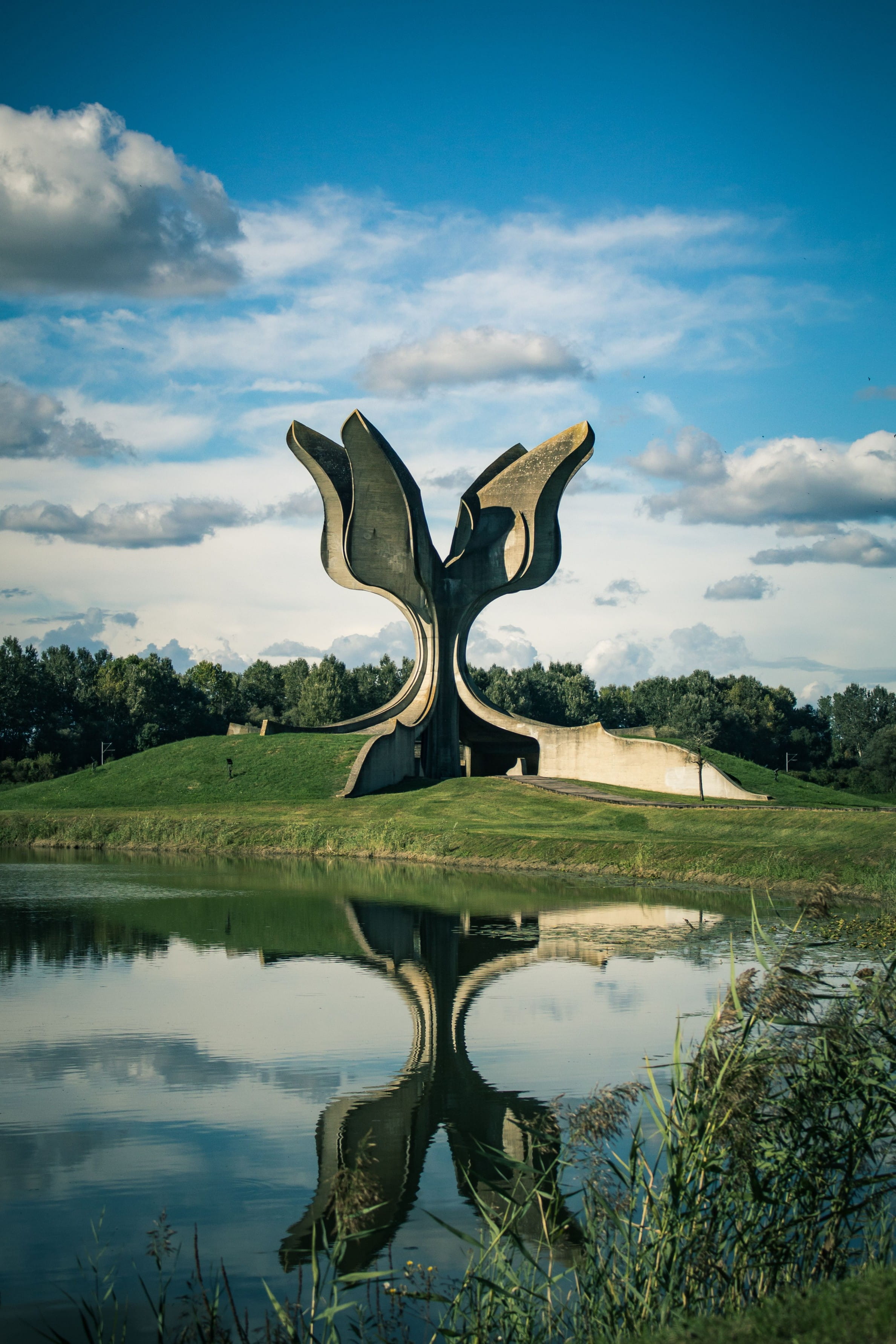 Andrea Music via Pexels
 Recently, I visited the site of the Jasenovac concentration camp, established and operated from 1941 to 1945 by the Ustaše regime of the Independent State of Croatia (NDH) and the largest concentration camp outside of Nazi Germany. Jasenovac was a site of mass genocide against Serbs, Jews, and Roma, as well as the persecution and murder of Partisans and other opponents of the regime.
Upon arrival, I was surprised that there were almost no traces of the camp left, as though it had never existed. The atmosphere felt ambiguous, and the monument and museum were minimalistic.
There were few signs marking the site. If you drove by without knowing what it was, or if there were no monument or museum, you might never notice it. Since nothing remains of the camp and the area is now an open field, it created the impression that the minimalist design was intentional. I believe this minimalism strongly symbolizes a country’s willingness to acknowledge and confront its past.
The monument in the middle is a large concrete flower rising from the ground; it is gray, open, and mostly empty inside. It contributes to the feeling that there was considerable uncertainty in creating the monument as a symbol of past genocide. On the inside of the monument, a selection from the poem Jama (The Pit) by Ivan Goran Kovačić is inscribed. It reads:
“That simple happiness, the window's glint;
a swallow and its young; or windborne garden sweet where?
The unhurried cradle's drowsy tilt?
Or, by the threshold, sunshine at my feet?”
This excerpt feels hauntingly tranquil in comparison to the rest of the poem, which features horrifying descriptions of torture and death. I found it unsettling that this excerpt was chosen, highlighting the blissful desparation for a simple, peaceful, and domestic life at a site of mass genocide.
The museum was also minimalistic but informative. The design felt like walking through a maze, leaving an uneasy feeling, which I found very effective in creating feelings of discomfort and empathy towards the victims.
Crossing over to Bosnia and Herzegovina to see the killing fields also made me feel uneasy. There was a small map and sign at the front, but beyond that were only open fields. Again, if you didn’t know what the site was you might never realize thousands of people were killed and buried there. I had never seen mass graves before, and the experience made me feel nauseous.
As we were leaving, I saw some men driving tractors and spreading hay throughout the fields. Of course, life goes on, and seeing tractors in a field is not unusual. But this is land where a mass genocide took place, now reduced to open fields after everything was destroyed. It made the environments feel very disconnected.
Seeing normal life continuing above mass graves and sites of genocide contributed to my feelings of ambiguity around the country’s acceptance of its past. It reinforced my impression of a disconnection between the recognition of the genocide and life continuing around the site.
 Back to Focus