Focus ROMI.HR
/
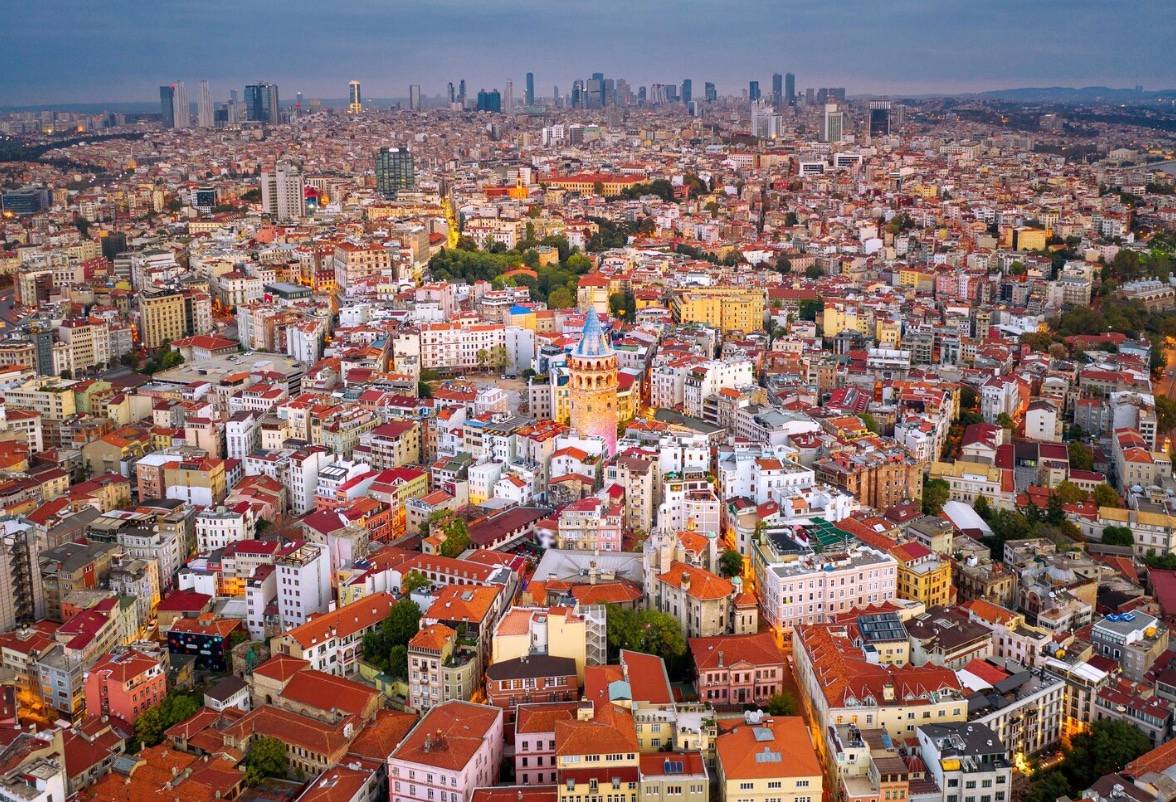 Aerial view of Galata Tower and Istanbul, Türkiye. Source: tawatchai07 via Freepik
 Istanbul is more than its tourist attractions and bustling boulevards; it is also a city of hidden neighbourhoods where centuries of Roma presence have shaped culture, music, and community life. These neighbourhoods—historic yet vulnerable—reveal the tensions between heritage and urban transformation in one of the world’s most dynamic cities.
Istanbul is a tapestry of neighbourhoods shaped by history, migration, and urban change; among these are communities that have long identified as Roma, whose presence in the city spans centuries. These Roma neighbourhoods, from Sulukule near the old city walls to the mahalleler in Beyoğlu and Kasımpaşa, carry stories of culture, marginalization, resilience, and spatial precarity.
One of the most emblematic cases is Sulukule, which is believed to be one of the oldest Roma quarters in Istanbul, its roots stretching back beyond even the Ottoman conquest. For centuries, Sulukule was a place of entertainment, music, storytelling, and a living built environment adapted to a communal way of life. However, as reports and studies show, what was once a vibrant, dense maze of small houses, courtyards, and community activity came under pressure in the early 2000s from urban renewal plans. Demolition and forced relocation fractured the social fabric; the original inhabitants were pushed out, and much of what made Sulukule unique was destroyed or altered.
Beyond Sulukule, other Roma neighbourhoods—Selamsız on the Asian side, Küçükbakkalköy in Ataşehir, Çürüklük in Beyoğlu—together form a pattern of spatial clustering in both the old and new edges of Istanbul. The “İstanbul Roman Çalıştayı” and the more recent Romani Godi field reports map out dozens of such neighbourhoods. These reports reveal that many of these communities are under threat: either targeted for or already experiencing urban transformation. Residents speak of insecure housing, lack of infrastructure, poor public services, and risk of displacement.
The Roman Dernekleri Saha Raporu by the Istanbul Planning Agency indicates that in Beyoğlu alone there are tens of thousands of Roma citizens living in numerous neighbourhoods. Some of these neighbourhoods—Hacıhüsrev, İstiklal, Yenişehir (Piyalepaşa), Tarlabaşı, Kasımpaşa-Bostan, among others—are dense in this population and are often mixed with other marginalized groups. These reports also reflect internal diversity: people in these neighbourhoods differ by time of settlement, economic activity, connection to civic services, political affiliation, and exposure to displacement risk.
Urban renewal and gentrification loom large in the narrative of Roma neighbourhoods in Istanbul. In many cases, redevelopment is justified by claims of poor housing conditions or earthquake risk, but often results in displacement, loss of traditional livelihoods, and dilution or erasure of communal memory and spatial culture. The Sulukule case remains a powerful example of what can happen when redevelopment proceeds without full engagement of and protections for Roma inhabitants. Further, Romani Godi’s 12 Roman Mahallesi Saha Ziyaret Raporu shows that in several neighbourhoods across Istanbul, the transformation is not only physical but also social: access to public services (health, education) is uneven, and residents often feel excluded from planning decisions about places where they live.
Moving forward, the challenge is multi-fold: recognizing these neighbourhoods not as problems to be solved but as living communities with rights; integrating Roma voices into planning; ensuring that urban development meets both safety and heritage concerns; and preventing cultural erasure. Istanbul’s municipal studies and civil society reports offer insights, but implementation often lags, especially in protecting the most vulnerable. In the second part of this series, we will explore daily life, cultural resilience, community organizing, and visions from within these neighbourhoods.
 Back to Focus