Features ROMI.HR
/
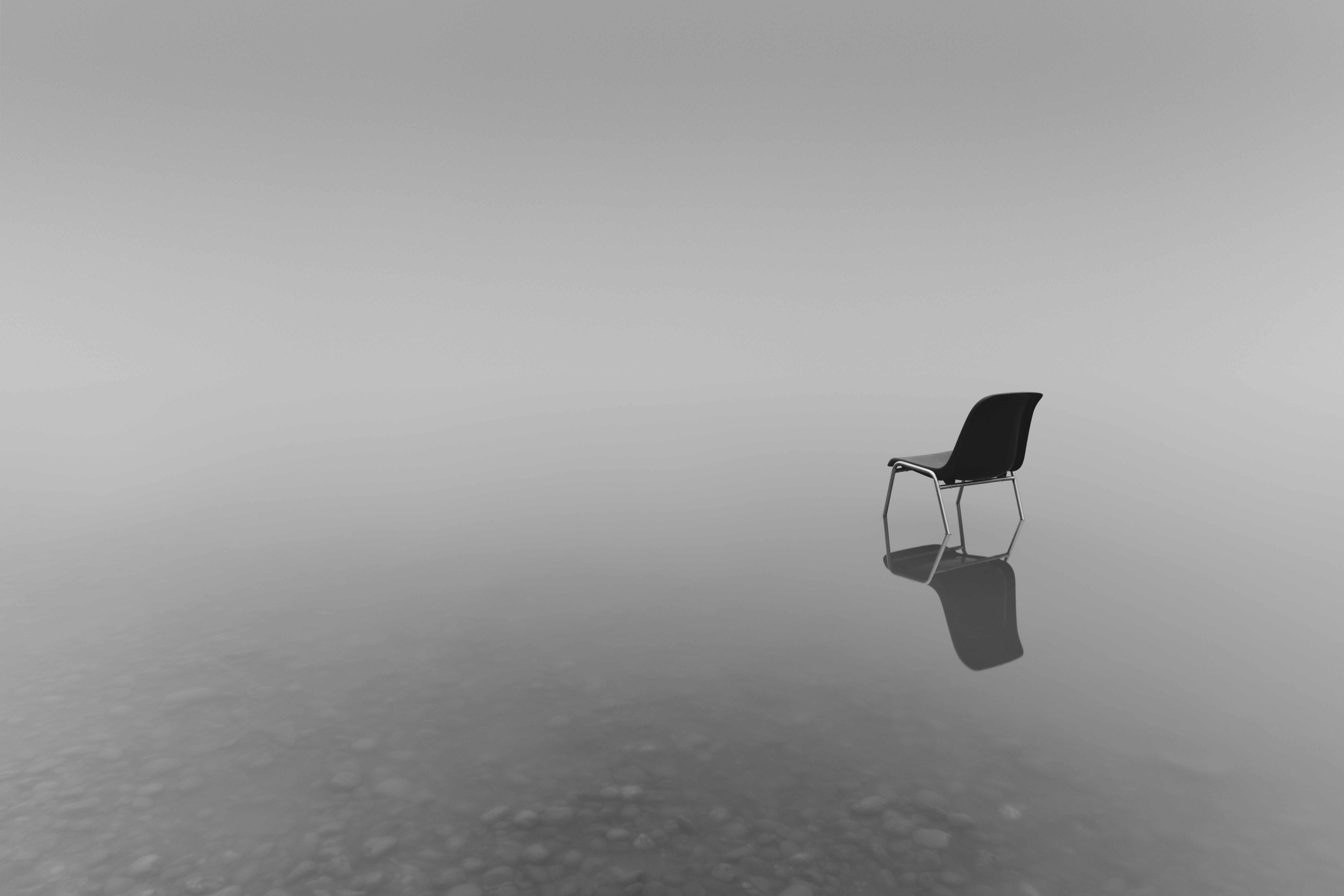 Source: wirestock via Freepik
 Between the end of March and the first week of April, the Cinema Kaptol in Zagreb has been the focal point for ZagrebDox, the International Festival of Documentaries. Among this huge variety, a particularly intriguing movie was “At the Door of the House Who Will Come Knocking” (‘’Ko će pokucati na vrata mog doma’’), shot in 2024 by Maja Novaković.
The program of ZagrebDox, the International Festival of Documentaries for the 21st edition was quite heterogeneous and included documentaries on several different themes, from the ongoing conflicts between Russia and Ukraine, and Israel and Hamas, to social issues concerning emotions and feelings. Among this huge variety, a particularly intriguing movie was ‘’Ko će pokucati na vrata mog doma’’ (“At the Door of the House Who Will Come Knocking”), shot in 2024 by Maja Novaković. The movie, realized with the support of the Serbian Ministry of Culture, is set in the mountainous area of Bosnia and Herzegovina, and follows the day-to-day life of Emin, an old man who lives in almost complete solitude with the exception of his beloved horse, called Igman, and a couple of cats and dogs to whom he offers a shelter and food. The movie, with the exception of a couple of dialogues, is completely silent, as the narration is non-verbal and driven more by images than by words.
The movie is set during the winter season, a factor that enhances Emin’s loneliness and solitude: everything surrounding his house is covered in a thick layer of snow, and every possible interaction is limited by the harsh weather. All these factors are visible in Emin’s face, which reveals melancholy and sadness for his condition, but also a never-ending attempt at reaching out to his “neighbours”, people that live in houses not far from his. However, every possible occasion to spend some time with them, and every invitation he sends for them to hang out with him in his house, is always turned down. In the movie, the whole group of neighbours is symbolically represented by one of them, whose name remains unknown, who always rejects Emin’s offer by claiming that he must rush home, where others are waiting for him, and where he has multiple duties to deal with.
However, Emin has not always been alone. There are some hints in his small house that seem to be pointing back at a brighter, happier past: one of them is surely the picture of a married couple that is hanging on one of the walls. Even though the director does not clarify who they are (Emin’s parents? Or maybe it’s a picture of him and his spouse on the day of their wedding?), the scene in which Emin stares at it is very deep and emotional. We don’t know what thoughts are passing through his mind, but we manage to understand his feelings, even without saying any words. There is also another character that makes a few appearances throughout the movie: a kid, maybe six years old or a little older, that seems to populate Emin’s dreams. Once more, Novaković leaves unclear who this young boy is, or what is his role in the whole plot. What can be felt, however, is the pain - almost grief - that Emin experiences every time he dreams of this kid, as he also says in one of the few sentences of the movie.
At the end of the movie, Emin seems to experience some sort of ‘moment of being’, to say it with Virginia Woolf. In Woolf’s poetic vision, moments of being were moments of self-revelation in which a person experiences a rare insight on reality beyond appearances and societal constructions. The content of Emin’s moment of being is, once again, left to the understanding of the audience: it may be guessed that it refers to a sudden realization of his age and the fact that he is going through the twilight of his life; or it may depend on the awareness that he will never be able to meet that young boy that populates his dreams anymore. All this leaves Emin with a deep feeling of loneliness and discouragement, which he expresses in an incredibly moving monologue while he hugs his horse Igman, who - according to Emin - is the only one who understands him and his relationship with nature and life.
However, this movie goes beyond the simple portrait of the life of an old, lonely man: with its breathtaking shots and its silence, the suggestive musics and the intense looks of Emin, ‘’Ko će pokucati na vrata mog doma’’ manages to instill in the audience a deep feeling of empathy. From Emin’s care for his horse Igman and the cats and dogs that he has, somehow, adopted, to the respect for nature, from the persistent attempts at building a relationship with his neighbour to the subtle love that emerges when Emin looks at the picture of the married couple, these are all elements that make the viewers empathize with Emin, although his life choices may be far and hard to understand for someone in the XXI century.
Therefore, even though this movie is not strictly related to Human Rights, it puts under the spotlight an element that should be at the core of any human rights-related action: empathy. Looking at other people’s choices and trying to understand them even when they are distant from our experiences is what should animate anyone who wants to be a progressive actor in the field of Human Rights. Additionally, this reminds viewers that in a moment in which Human Rights are highly institutionalized by international covenants and organizations, there is something that cannot be codified: values, attitudes, and respect. Without them, no significant progress in Human Rights protection can be made, and ‘’Ko će pokucati na vrata mog doma’’ does a wonderful job in this sense.
 Back to Features